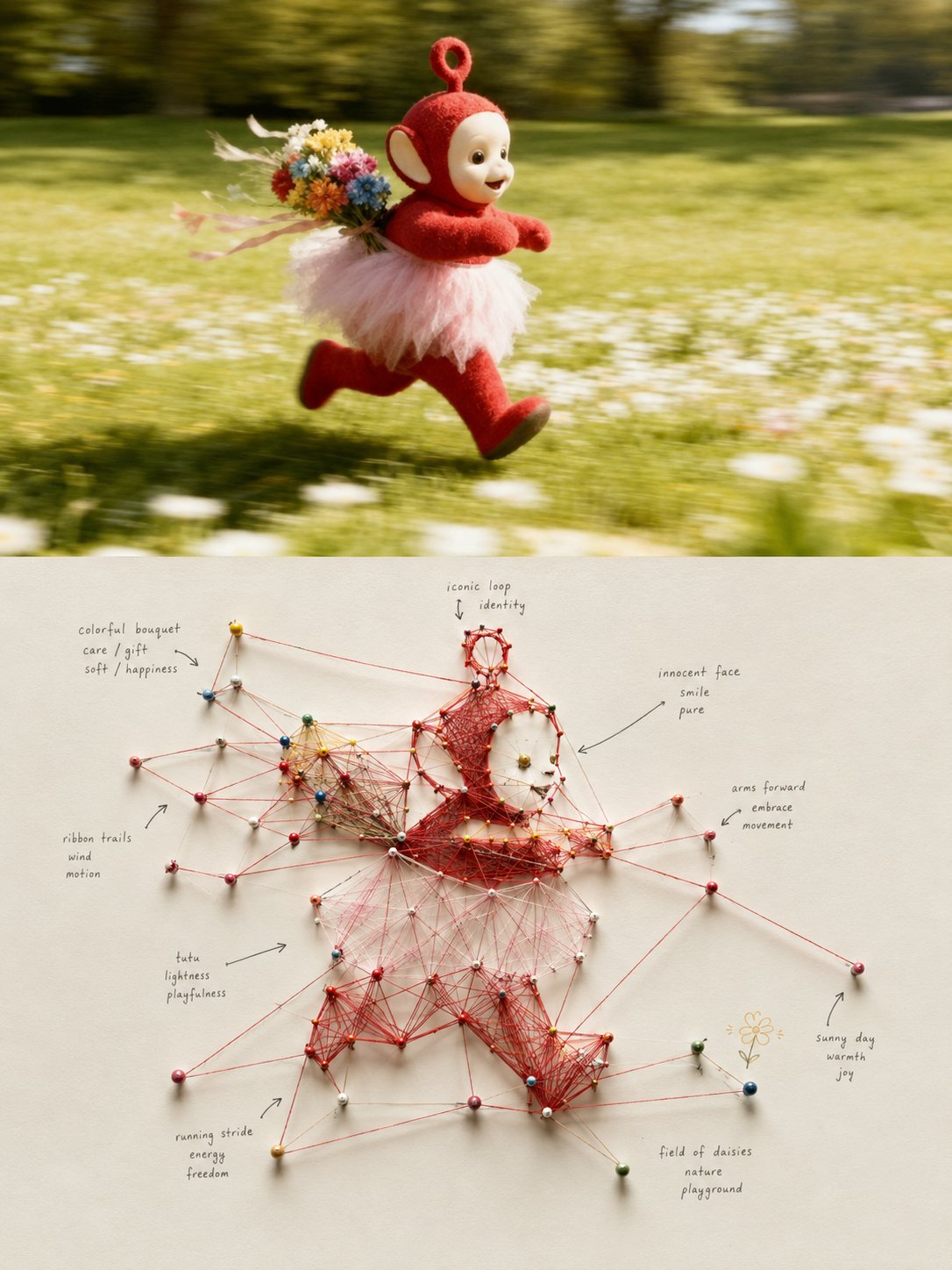
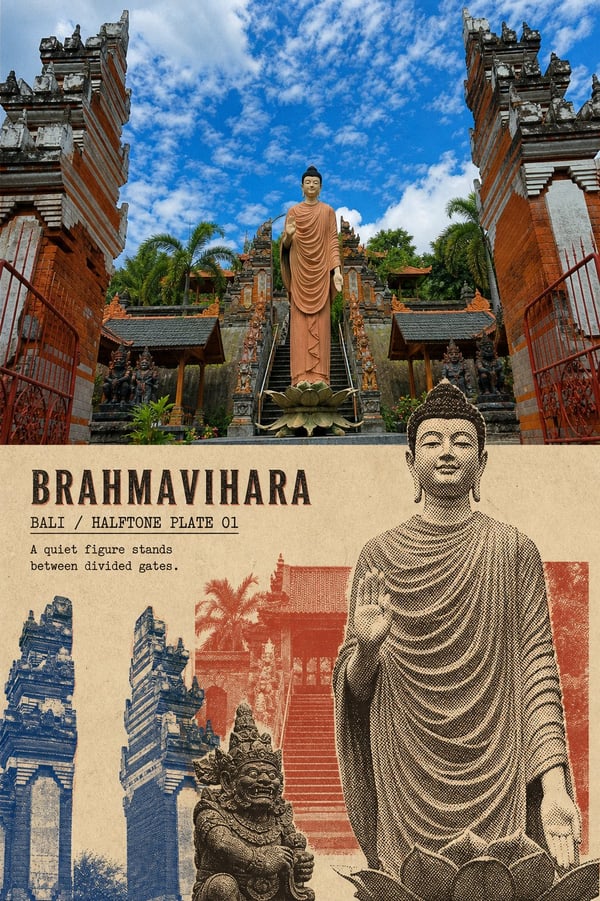
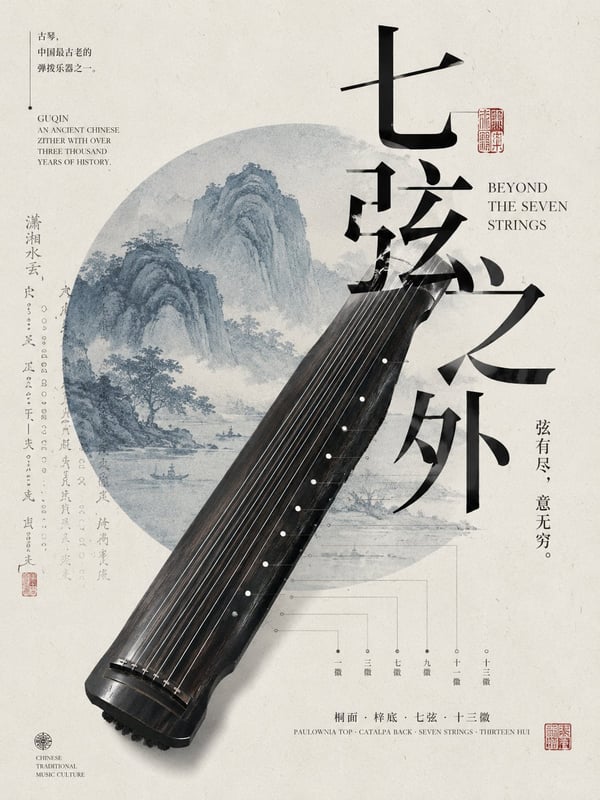
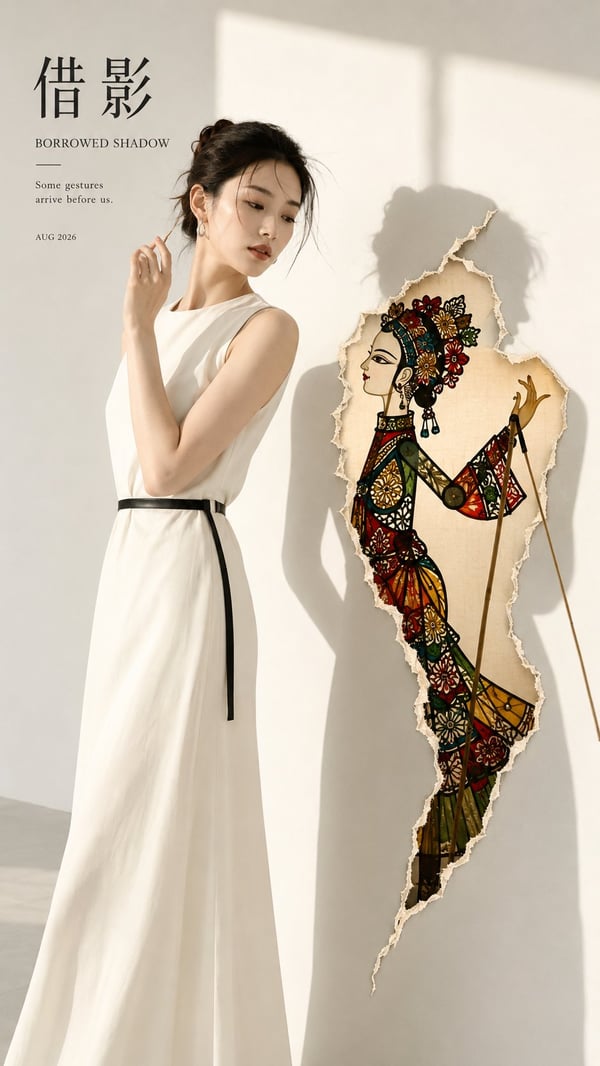
Please turn each uploaded photo into an independent premium design poster — do not collage multiple images, output each photo separately. Overall 3:4 vertical composition, with a strict 1:1 split between two regions, each occupying 50% of the canvas.
The upper half preserves the original photo, keeping the subject's identity, structure, pose, real texture, natural light/shadow and the original color atmosphere, only doing light premium color grading to give it the quality of an art magazine, independent publication or exhibition image. To fit the aspect ratio, the environment can be naturally extended, but the subject must not be stretched, distorted or altered.
The lower half extracts the most recognizable subject, outline, structure, pose and narrative relationship from the photo, and translates them into a real, touchable Physical String-based Systems Map / Tangible Node-link Visualization. Do not directly depict the original object, but break the subject into a small number of meaningful nodes and relationships: key outlines, structural turning points, action directions, spatial positions or environmental cues become pin-like Nodes, and real string is used between them as Edges / Links, so that the visual relationships of the original photo are re-rendered as a physical network while the identity and structure of the original subject can still be vaguely recognized.
The composition uses a clear core node or core relationship as the visual hub, with the remaining nodes naturally unfolding around the subject's structure. The string is not randomly tangled, but should establish relationships based on the original image's direction, proportion, distance, connection and narrative logic; some nodes form radial, converging, triangular, polygonal and cross-region connections, so that many simple relationships naturally produce emergent geometry. Overall both complex and ordered: denser relationships in the center, gradually looser toward the periphery, with ample negative space, avoiding covering the entire layout.
Materials must have a real physical-installation feel: small pins, needle stitches, cotton thread or thin string, paper labels, handwriting traces and a real cardboard surface, retaining slight differences in string tension, node height, crossing occlusion, stitch shadow and handmade imprecision. The whole thing should look like an art-directed research wall, a systems-design experiment or an information-art installation, not a computer-rendered network diagram, with no cyber UI, no digital glow lines and no cheap detective-board feel.
The string uses vivid but restrained vermilion, coral red or warm red as the main relationship color, creating visual tension against a large area of natural white, warm white, light gray or a very light background tuned to the upper photo's overall color temperature; pins, paper tags and small marks can echo small local feature colors extracted from the upper photo. Overall colors are clean, modern and alive, avoiding dark brown, dirty and old, blood-red horror and over-retro-aging.
Text intervenes freely as Hand-lettered Annotation in the system, without pre-set fixed titles, locations, dates or menu-style information. Based on the subject, action, position, mood, relationship or metaphor in the photo, freely generate a small number of keywords, short sentences, arrows, circle marks or micro notes, and write them directly near nodes, at string intersections or in negative space. Use small, loose, slightly research-note-feel handwritten annotation fonts with writing deviations, so that text feels like natural traces of thought during observation, while maintaining the restraint and legibility of high-end editorial design.
Overall presentation: physical nodes, red string, relationship mapping, emergent geometry, handwritten annotation and large negative space together form a high-end experimental visual. Whether the subject is a person, animal, plant, building, object, vehicle, natural landscape or complex scene, it should translate 'what it is' into 'how its parts relate', forming a tangible information visualization with a research feel, artistic feel, systematic nature and handmade warmth. Avoid random red lines, meaningless nodes, full-page chaos, horror crime boards, digital network UI, cartoon pins, templated mind maps and ordinary flowcharts.