Generate a 9:16 'Torn-paper Narrative Editorial Poster'. Four variants.
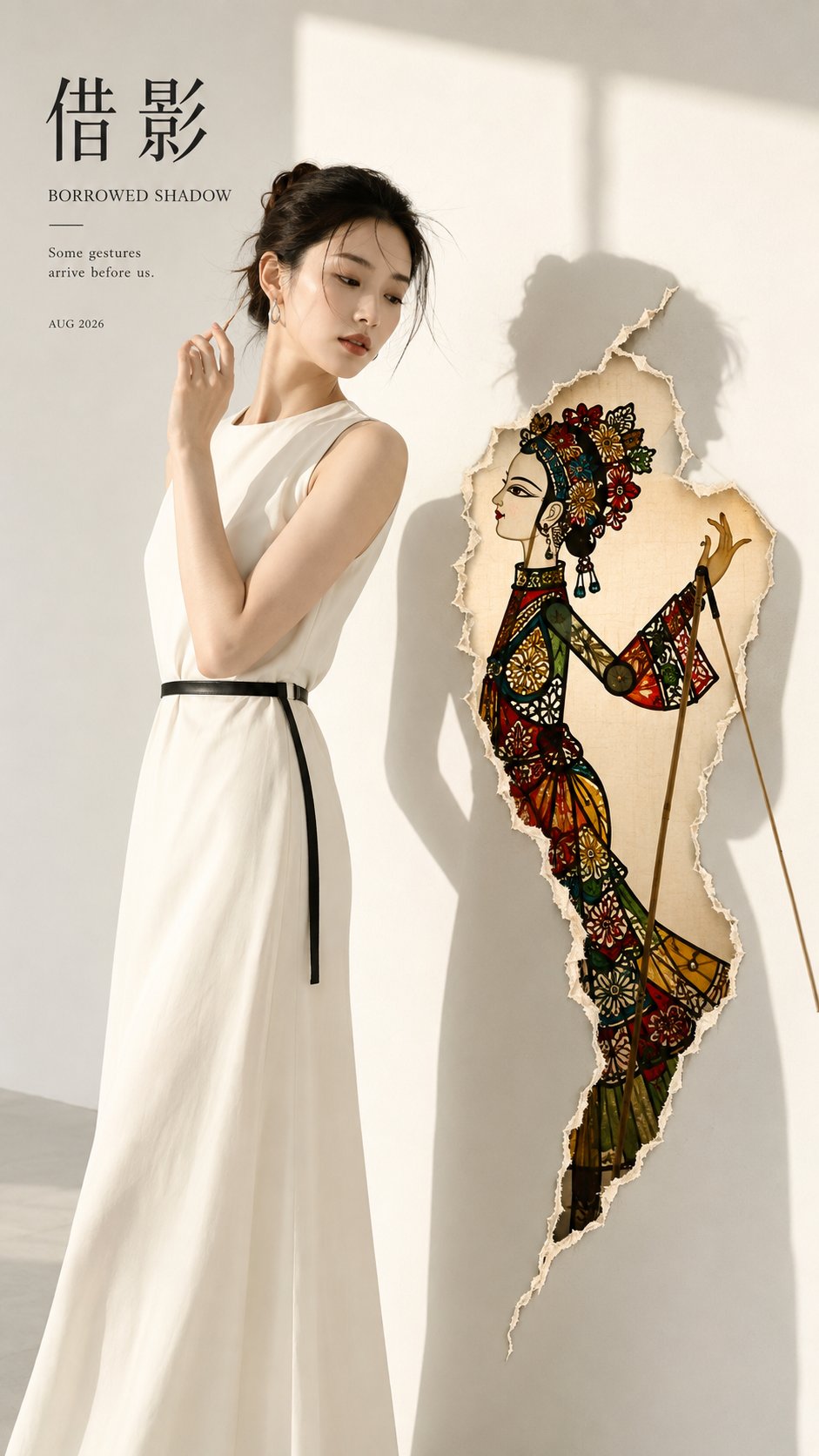
Variant 1 — 借影 (Borrowed Shadow):
[Main image]: Chinese shadow-puppet operator holding a translucent traditional shadow figure in front of a soft-lit curtain
[Main visual medium]: contemporary documentary photography
[Hidden image]: a hand operating real traditional shadow puppets under a small oil lamp
[Hidden medium]: traditional shadow-puppetry close-up with a single warm light source
[Tear location]: where the shadow-puppet figure overlaps with the operator's own shadow on the curtain
[Title]: 借影
Variant 2 — 最后一针 (The Last Stitch):
[Main image]: fashion editorial portrait of a model wearing a delicate dress
[Main visual medium]: modern fashion photography
[Hidden image]: macro shot of a hand pulling a colored thread through fabric with an embroidery needle
[Hidden medium]: hand-embroidery macro
[Tear location]: the dress fabric, peeling back to reveal the embroidery underneath
[Title]: 最后一针
Variant 3 — 镜中人 (The Person in the Mirror):
[Main image]: modern portrait of a woman in front of an antique mirror
[Main visual medium]: contemporary portrait photography
[Hidden image]: a hand-tinted vintage portrait photograph from the early 20th century
[Hidden medium]: hand-colored old photograph
[Tear location]: the mirror surface
[Title]: 镜中人
Variant 4 — 旧戏新声 (Old Opera, New Voice):
[Main image]: contemporary rehearsal scene of a young Chinese opera performer
[Main visual medium]: modern documentary photography
[Hidden image]: close-up of a traditional Chinese opera mask and stage costume details
[Hidden medium]: traditional Chinese opera still life / prop detail
[Tear location]: the performer's sleeve or sleeve + face
[Title]: 旧戏新声
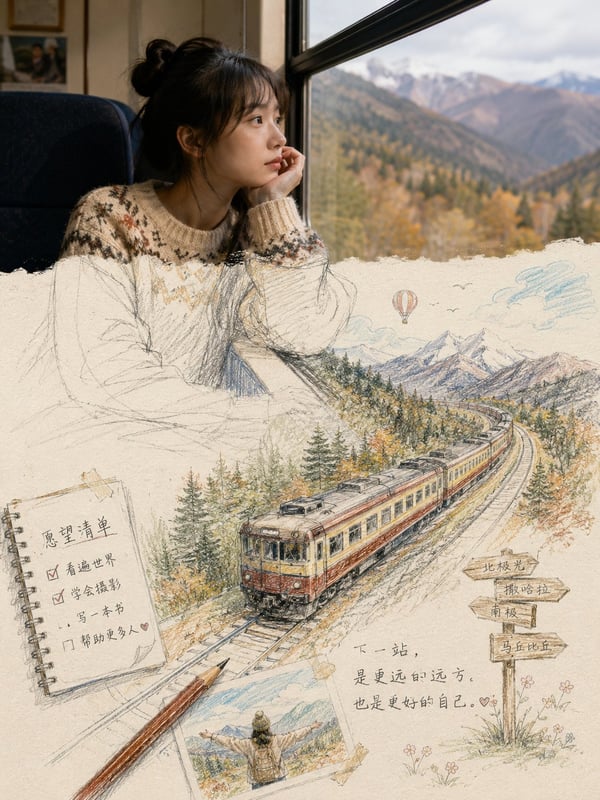
Main image takes about 75%-80% of the frame as the absolute visual subject; only tear open about 20%-25% of a local area to reveal the hidden layer — do not split it into a left/right or top/bottom 50:50 layout.
The torn-open front and back must use two clearly different visual media, and form strong differences in color, light, grain, material or clarity. Do not use a uniform retro filter to re-tune the two worlds into the same visual style.
Let the tear naturally combine with the figure, mirror, shadow, clothing, action or scene structure, so the opening itself participates in storytelling.
The paper edges must be real and fine, with fibers, frayed edges, slight thickness and natural shadows; the whole stays bright, clean and high-end, with the figure's face and hair natural and complete.
Use restrained Editorial Typography, one main title + a small amount of auxiliary text, large negative space.
Avoid 50:50 collages, overall dark yellow, dirty gray blocks, rough grunge, large amounts of meaningless text, numbers, logos and cheap torn-paper sticker feel.
生成一张 9:16「撕纸叙事 Editorial Poster」。共四种变体。
变体一·借影:
【主画面】:中国皮影操偶师在柔光帘前托起一具半透明的传统皮影
【主视觉媒介】:当代纪实摄影
【隐藏画面】:一只在小型油灯下操作真实传统皮影的手
【隐藏层媒介】:皮影戏微距,单一暖色光源
【撕裂位置】:皮影人偶与操偶师自身影子在帘上重叠处
【标题】:借影
变体二·最后一针:
【主画面】:身着精致连衣裙的模特时尚编辑人像
【主视觉媒介】:现代时尚摄影
【隐藏画面】:一只手用刺绣针将彩色丝线穿过织物的微距
【隐藏层媒介】:手工刺绣微距
【撕裂位置】:连衣裙的布料,撕开后露出底下的刺绣
【标题】:最后一针
变体三·镜中人:
【主画面】:一位女性站在古旧镜子前的现代肖像
【主视觉媒介】:当代人像摄影
【隐藏画面】:一张20世纪初手工上色的老照片
【隐藏层媒介】:手工着色旧照片
【撕裂位置】:镜面
【标题】:镜中人
变体四·旧戏新声:
【主画面】:一位年轻戏曲演员的现代排练场景
【主视觉媒介】:现代纪实摄影
【隐藏画面】:传统戏曲面具与戏服细节特写
【隐藏层媒介】:传统戏曲静物/道具特写
【撕裂位置】:演员袖口或袖口+脸部
【标题】:旧戏新声
主画面占约 75%–80%,作为绝对视觉主体;只撕开约 20%–25% 的局部区域展示隐藏层,不要做成左右或上下各占一半的分屏。撕开前后必须使用两种明显不同的视觉媒介,并在色彩、光线、颗粒、材质或清晰度上形成强烈差异。不要使用统一复古滤镜把两个世界重新调成同一种画风。让撕裂与人物、镜子、影子、服装、动作或场景结构自然结合,使裂口本身参与故事表达。纸张边缘真实细腻,有纤维、毛边、轻微厚度和自然阴影;整体保持明亮、干净、高级,人物脸和头发自然完整。采用克制的 Editorial Typography,一个主标题 + 少量辅助文字,大面积留白。避免 50:50 拼图、整体暗黄、脏灰色块、粗糙 grunge、大量无意义文字、编号、Logo 和廉价撕纸贴图感。